
The woodcarver and the forest
2025, single channel video projection, colour, stereo sound, 24 hours 51 minutes, and 7 b&w photos.a ruthless deforestation machine disguised as an image of mindfulness.
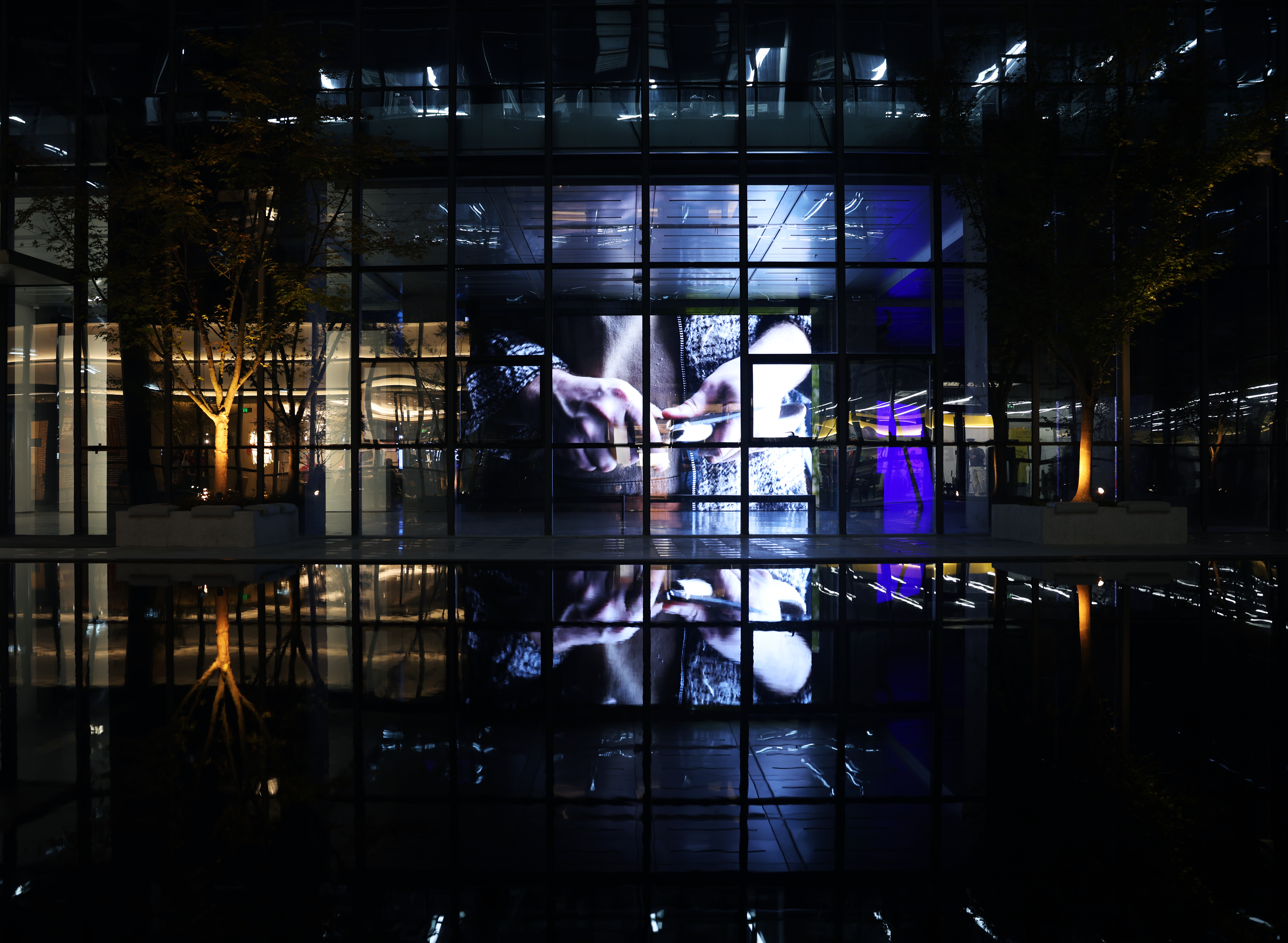
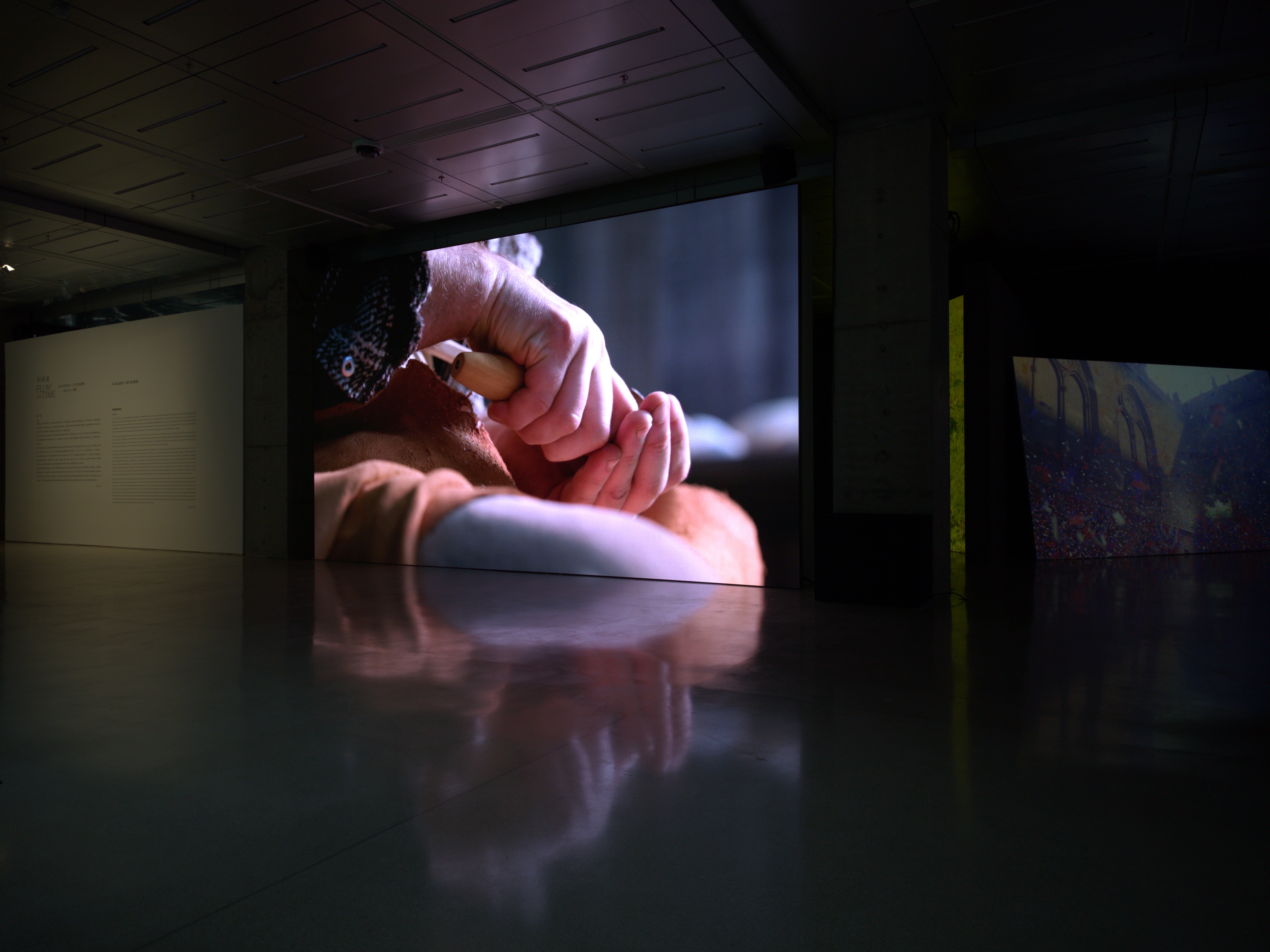
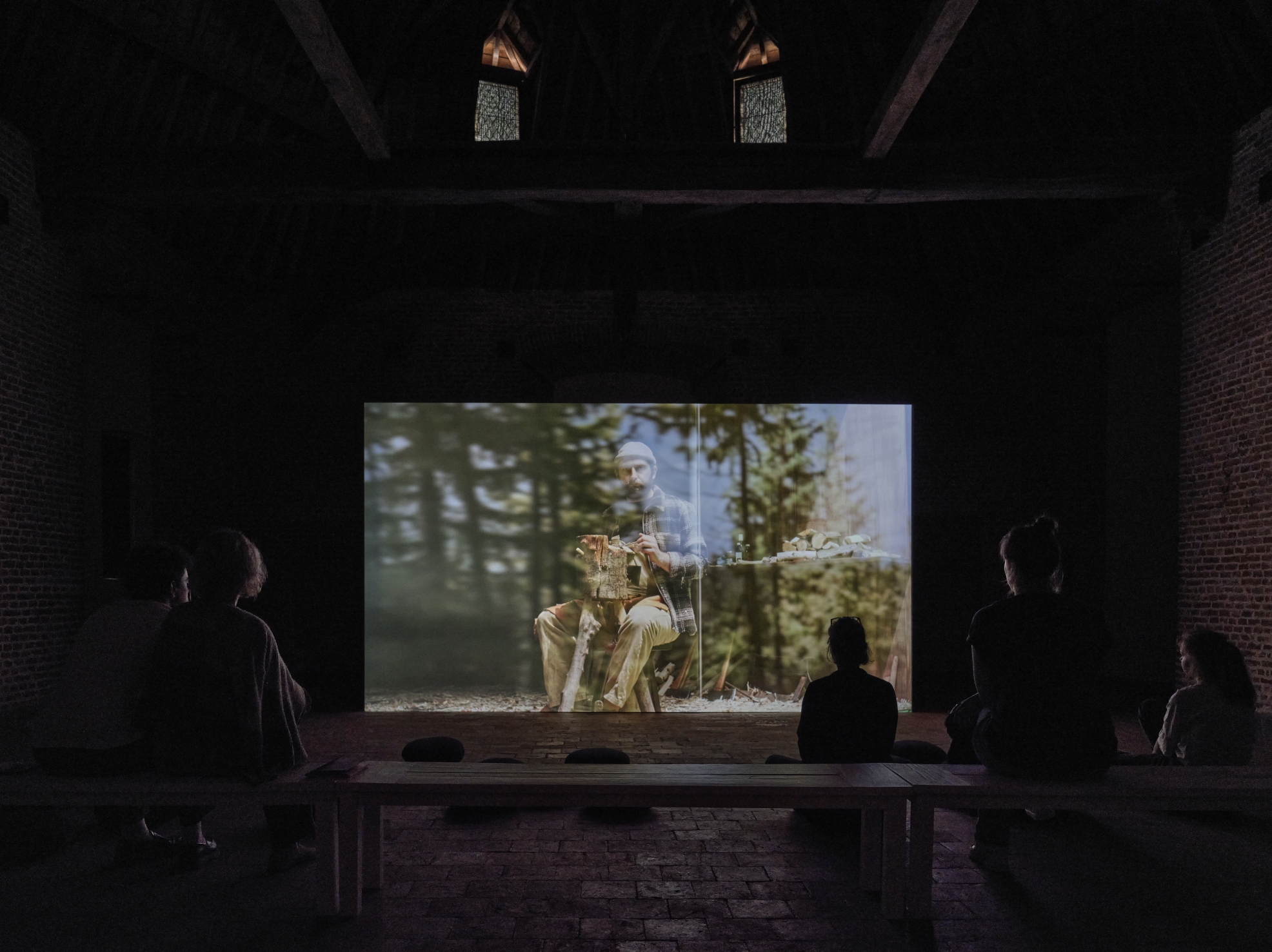
The title of the film The woodcarver and the forest hints at the craft of woodcarving that has gained in popularity in recent years as a way to relieve screen fatigue and connect to nature while living indoors. Especially among young adults, woodcarving has become a popular way to regain focus, become mindful and improve fine motor skills. Indeed: watching a log transform into a spoon can be categorised among the ASMR effects (Autonomous Sensory Meridian Response), with gentle cutting and scraping sounds and movements having a calming effect on the observer. For David Claerbout, who seemed particularly sensitive to ASMR stimuli, the process of creating this film became a paradoxical experience: a sensation of feeling deeply relaxed while working towards the stressful realization of this film - a practical conundrum. Whether this relaxation also occurs in the disarmed observer of the artwork, remains to be seen, but it’s clear that the deliberate use of ASMR suggests a certain irony towards the supposed engaging and transformative powers of contemporary art, an attitude that can be traced back to Claerbout’s earlier works, where he rather provocatively used relaxation music. Despite the use of this kind of popular low-culture motifs Claerbout’s work has been described as minimalist film art. He suggests we should seek art ‘over time’ rather than art as an image, hence art-to-live-with.
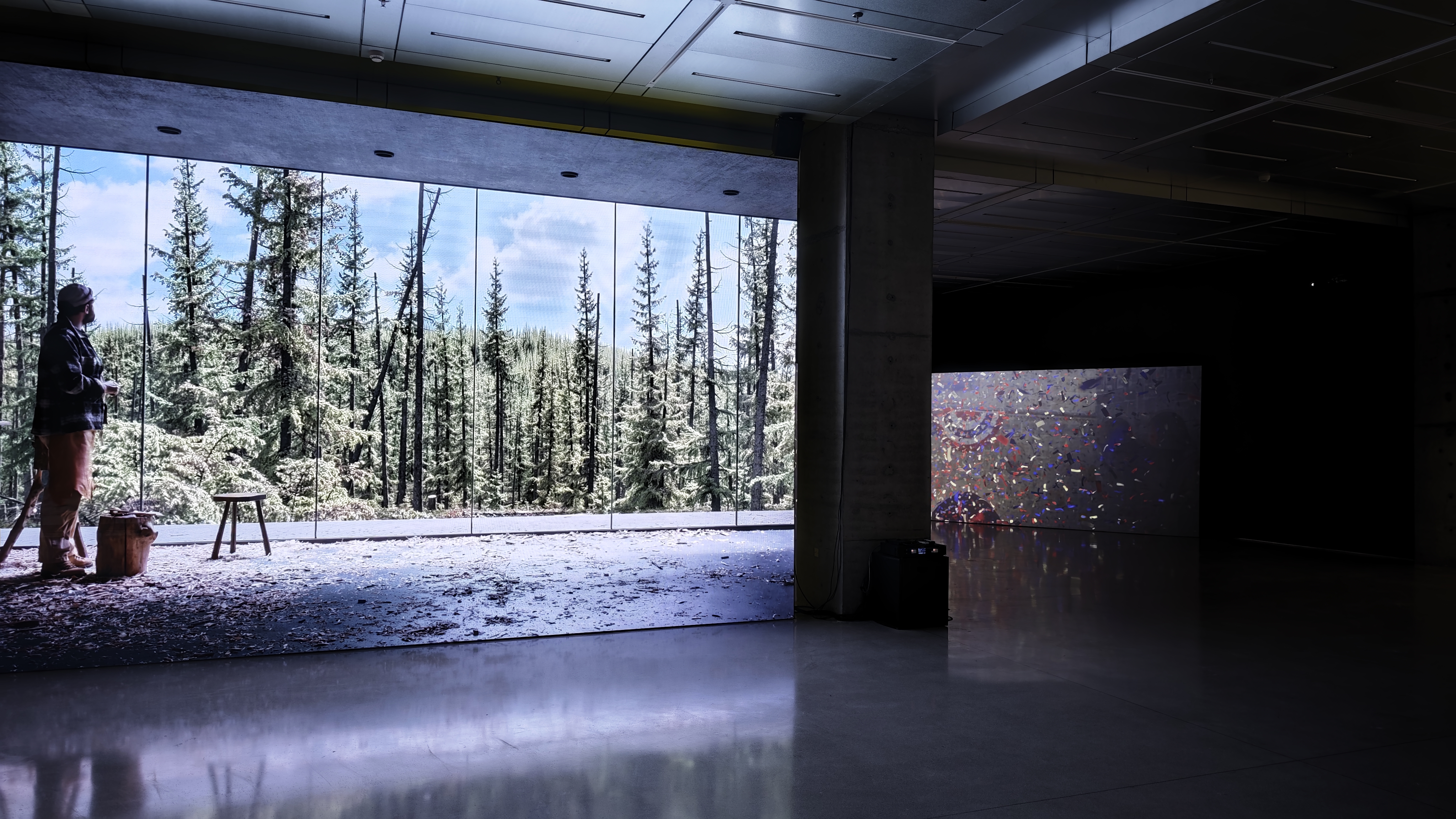
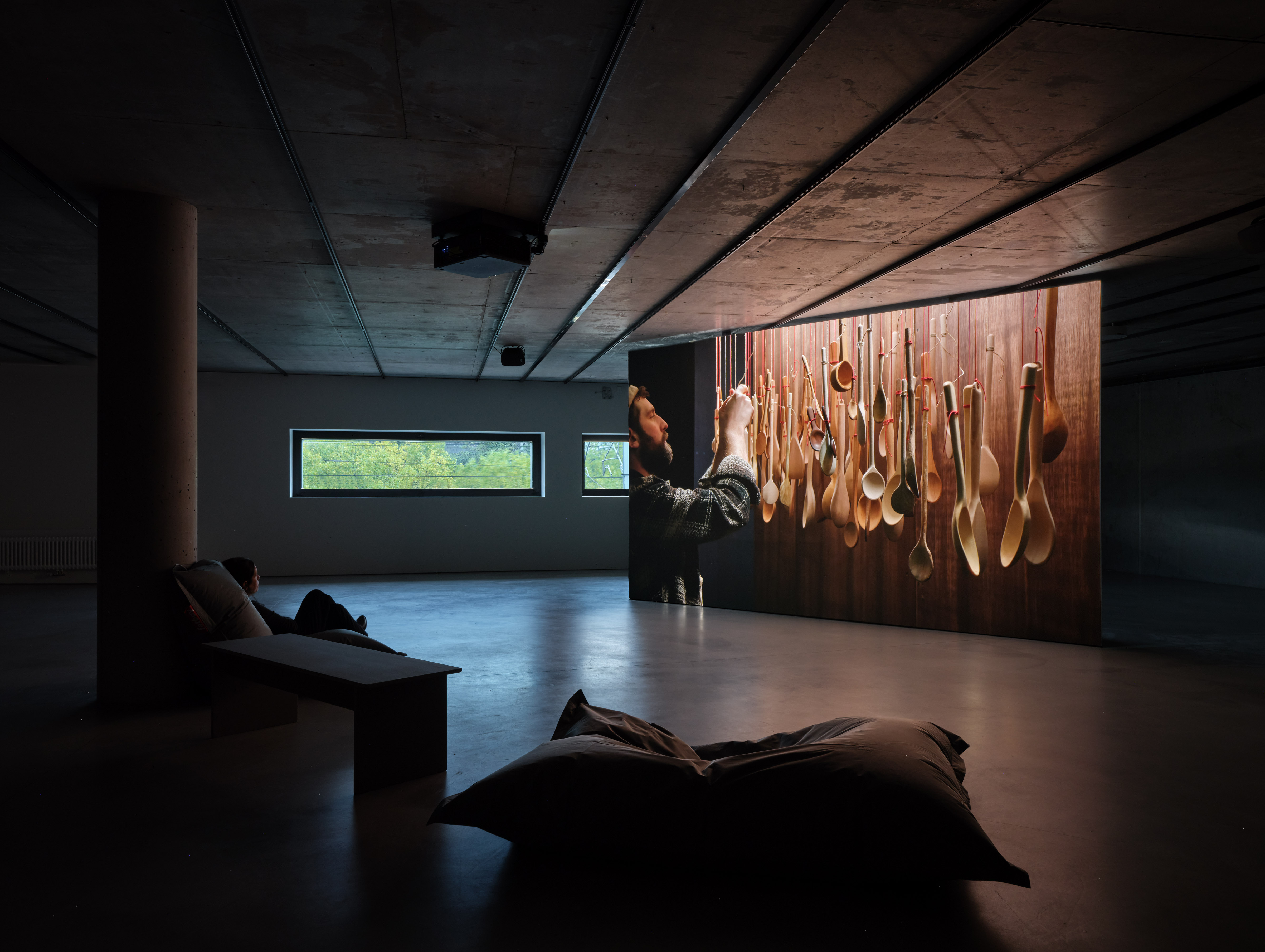
The woodcarver and the forest is a processual film disguised as an ever-repeating, infinite short film – similar to Bordeaux piece (2004), White house (2006) and Olympia… (2016-3016), frequently listed among the longest films of all time. It’s a film in two parts: a lively forest and a whisperingly silent interior. The structure is simple, easy to remember, even with one’s eyes closed. Outside, birdsong, the sound of life, fills the air, while inside, behind the window, life comes to a halt, and we are drawn into a perfectly still room of lifeless objects. As the camera shifts to the interior, it feels as though the world is holding its breath - until, at last, that breath is released again, and life rushes back in. (“I still believe the rhythm of breathing measures time more naturally than any clock”, says Claerbout in his diary about this).
Only when you, as a visitor, spend enough time with the work does the film reveal its Janus-like character. Its natural beauty, with its lush forest views, hides what’s really going on. The heartache of watching the forest vanish, its trees felled one by one, is a powerful reminder of the passage of time. Before we know it, there may be nothing left.









David Claerbout ©2026